Udo Kier, a fearless kaleidoscope of horror, arthouse and Hollywood, dies at 81
- Nov 24, 2025
- 3 min read
24 November 2025
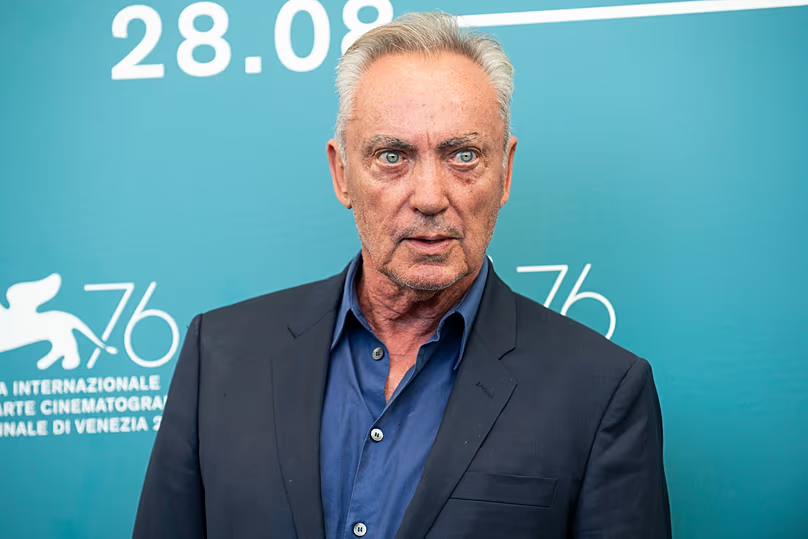
The world of film lost one of its most eccentric and enduring figures when Udo Kier passed away on Sunday morning at the age of 81, his partner Delbert McBride confirmed. His death was confirmed at a hospital in Palm Springs, California, following a career that spanned more than six decades and encompassed over 200 and by some counts 270, film, television and video game appearances.
Born Udo Kierspe in Cologne in October 1944 just hours after the hospital in which he was born was bombed, Kier’s early life was shaped by survival and reinvention. He later moved to London at 18, eager to learn English and pursue acting. His chance break came when he was cast by the experimental filmmaker Paul Morrissey, a close associate of Andy Warhol, in Flesh for Frankenstein (1973) and then Blood for Dracula (1974), where his bizarre looks and magnetic presence made him a cult icon.
Kier’s filmography is a patchwork of extremes: arthouse provocations, horror curiosities, Hollywood blockbusters and music-video cameos. He worked with visionary directors such as Rainer Werner Fassbinder on the “BRD Trilogy,” starred in several films by Lars von Trier including Breaking the Waves and Melancholia and found mainstream exposure in films like My Own Private Idaho (1991), where he acted alongside River Phoenix and Keanu Reeves. In Hollywood he also popped up in cult favourites such as Ace Ventura : Pet Detective, Armageddon and Blade.
What distinguished Kier was not simply his prolific output but his willingness to vanish into character even when playing villains or monsters. His face, with its piercing green eyes and angular features, lent itself equally to the absurd, the gothic and the sublime. He once said that horror roles appealed because they were memorable. “If you play small or guest parts in movies, it is better to be evil and scare people,” he told The Guardian.
Kier’s legacy also spans other cultural realms. He appeared in Madonna’s controversial book Sex, featured in her videos for Erotica and Deeper and Deeper, and even became the voice of the iconic video-game character Yuri in Command & Conquer : Red Alert 2. His cross-medium presence demonstrated a rare bleeding of film, pop, art and digital culture.
Despite his otherworldly screen presence Kier remained open about his identity. He lived for many years in Palm Springs, California, and was openly gay, once commenting that while his sexuality may have been obvious, what mattered most was the role he played that he did it well and audiences responded.
The news of his death has prompted tributes from across the film world. His partner described the loss as “heartbreaking” and many colleagues pointed to his unique ability to elevate even small supporting parts into indelible moments on screen. The absence of a disclosed cause of death underscores the enigmatic aura that defined much of his public persona.
For longtime fans and cinephiles Kier leaves behind multiple legacies. One is that of the “career actor” who never became a conventional star but was everywhere supporting roles, genre films, experimental art pieces and over time became iconic precisely for that ubiquity and chameleon nature. Another is that of the European actor who successfully navigated Hollywood without losing his edge. He proved that eccentricity could be marketable, that underground could cross into mainstream without losing authenticity.
As his final screen credit, The Secret Agent (2025) prepares for release, and as he appears posthumously in the video game OD co-produced by Hideo Kojima and Jordan Peele, Kier’s presence will linger across screens and consoles.
In reflecting on his career one is reminded of a key Kier-ism: “I liked the attention, so I became an actor.” That attention was never passive. It was transgressive, mysterious, playful and at times unsettling. In a film landscape often driven by brand and breadth Kier remained, to the end, driving by curiosity and difference.
For the generations of actors who never quite fit the mold and for the fans who sought off-kilter charisma, Udo Kier represented possibility, the possibility of being different and being embraced for it. As one tribute noted, “the screen will feel a little colder without his stare.”


Comments