Sarah Jessica Parker Felt Uneasy as Carrie Bradshaw Break the Fourth Wall and Saw Too Much of Ferris Bueller
- Jun 22, 2025
- 3 min read
22 June 2025
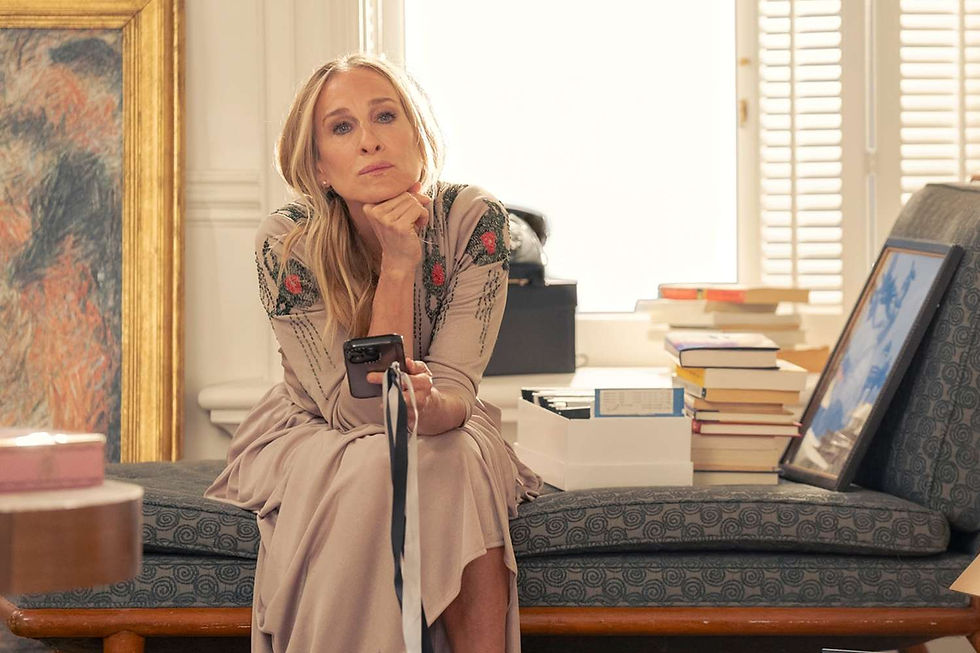
In a recent episode of Are You a Charlotte?, Kristin Davis’s lively rewatch podcast, Sarah Jessica Parker offered a window into the creative evolution of Sex and the City, revealing a moment when she intervened to safeguard Carrie Bradshaw’s authenticity. Early in the show’s development, Carrie frequently broke the fourth wall, addressing the camera directly, a device that struck Parker as jarring and reminiscent of Ferris Bueller’s Day Off. Reflecting on the pilot episode, she voiced discomfort and opened a dialogue that reshaped the series’ narrative style.
The show’s initial vision leaned heavily on talking-head interviews and street-style commentary, intercutting Carrie’s world with real-time observations. While these choices were perhaps intended to give Sex and the City a fresh, documentary feel, Parker found them disorienting. She described the experience as “so strange” and literally asked, "Do I have to talk to the camera? I'm in this scene." Her unease prompted production discussions with showrunner Michael Patrick King, and led to a collective decision to steer away from fourth-wall breaches.
What made this moment particularly delicate was Parker’s personal connection to the archetype. Her husband, Matthew Broderick, had made fourth-wall address iconic through his charismatic performance as Ferris Bueller. The comparison made Parker uneasy; she feared Carrie would be set up for an unfair contrast. According to Davis, Parker said she “was worried about Ferris Bueller” and felt she “was never going to live up to that.” That vulnerability underscored her instincts and showed a deep respect for both her husband’s legacy and her own craft.
At the heart of this creative adjustment lies authenticity. Davis praised Parker for expressing her thoughts clearly and without drama, simply stating her perspective: those narrative tools made her feel detached from Carrie’s emotional landscape. By articulating her viewpoint calmly, Parker set a tone of professionalism, open, respectful, and focused on finding the best approach for both performer and character .
Actor and playwright John Benjamin Hickey, who appeared on the podcast to discuss his time on the show and on Broadway alongside Parker and Broderick, confirmed that neither Parker nor King was ever fond of the gimmick. He also echoed Davis’s sentiments by calling Broderick’s Bueller “nobody ever did it better,” highlighting how Parker recognized the comparison would be unfair to herself and potentially disruptive to Carrie’s journey.
Ultimately, Parker’s influence helped transform Sex and the City’s central tone. By dropping the talking-head conventions and phasing out direct camera engagement, the show leaned instead on intimate storytelling and heartfelt dialogue. Carrie Bradshaw became a character viewers followed rather than observed, a New Yorker whose hopes, heartaches, and humor resonated because they were experienced rather than declared.
This creative choice ripples beyond a technical shift. It speaks to the confidence and insight of Parker as an actor deeply connected to her role. She protected Carrie’s voice, allowing it to emerge organically within the story, unfiltered by gimmicks. That decision helped shape the series, guiding it toward the voice and rhythm that would define its cultural legacy.
Fast-forward to today, and And Just Like That..., the sequel series, is again under the microscope. As nostalgia and new narratives collide, Parker’s reflections offer a masterclass in character integrity. She helped build the backbone of Carrie’s narrative: honest, relatable, and evolving. That early insistence on authenticity is perhaps the reason Carrie Bradshaw endures, even twenty-seven years on.
Behind the glamour of Manhattan lofts, fashion ensembles, and romantic entanglements, there was an actress, a creative, refusing to let style overshadow substance. Parker’s gentle assertion shaped a series that contained real emotional arcs rather than empty chatter. The difference moved viewers from watching to feeling and from giggling at witty quips to living in Carrie’s shoes.
In the end, this moment of self-aware restraint was exactly what Sex and the City needed. Parker’s layered reasoning, professional instinct, personal modesty, and narrative clarity became a turning point. Carrie Bradshaw could now grow through relationships and heartbreak, not through knowing winks at the camera.
Here we find something essential: respect for character, performer, and story woven by an actress who recognized that sometimes the most powerful performance means quietly stepping back.


Comments