Kennedy Center Renamed to Include Donald Trump, Sparking Backlash

18 December 2025
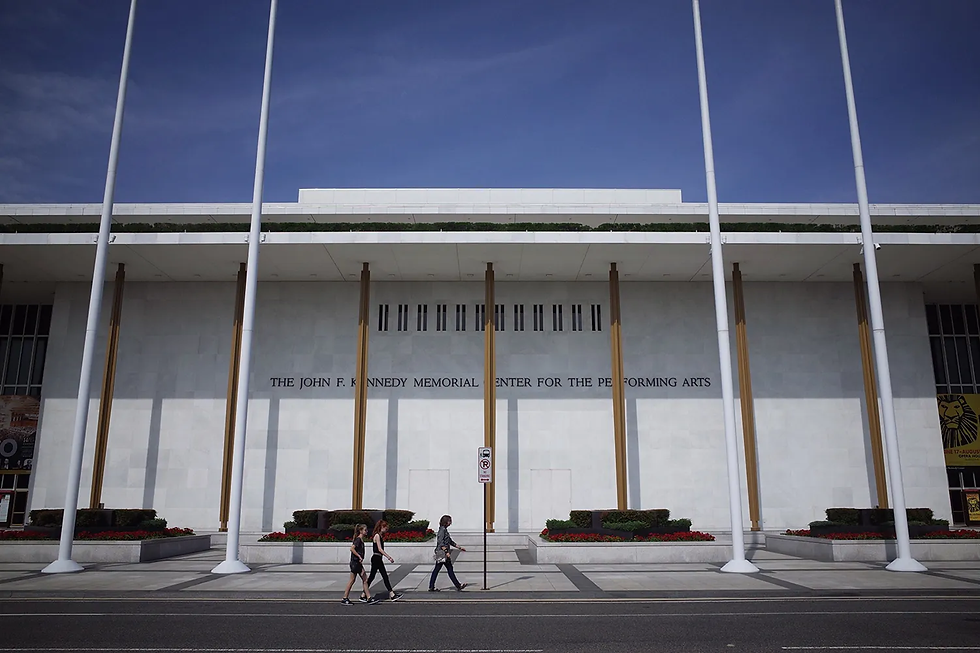
In a move that has ignited intense debate across political and cultural circles, the John F. Kennedy Center for the Performing Arts in Washington, D.C., has been renamed to include President Donald Trump’s name, a decision that has drawn both celebration from the White House and fierce opposition from critics who say the action is unlawful and undermines the institution’s original purpose.
On December 18, 2025, White House press secretary Karoline Leavitt announced that the center’s board of trustees had voted to rename the iconic venue the Trump-Kennedy Center, citing Trump’s role in revitalizing the institution both financially and reputationally. Workers quickly updated signage on the building’s exterior to reflect the new name, which now reads “The Donald J. Trump and The John F. Kennedy Memorial Center for the Performing Arts.” The decision has prompted uproar from members of the Kennedy family, legal scholars, Democratic lawmakers and arts community members, many of whom argue that the rename is not only inappropriate but also potentially illegal.
The Kennedy Center was established in 1964 by an act of Congress as a “living memorial” to President John F. Kennedy, whose assassination in 1963 stunned the nation. Federal law designating the center by that name makes clear its purpose as a tribute to Kennedy’s legacy and contributions to American culture. As such, critics argue that renaming the institution without congressional approval violates that statute.
Legal experts have emphasized that because the center’s name was set by law, only Congress has the authority to change it. Georgetown law professor David Super told The Washingtonian that while the board might express support for a new name, any official change requires legislative action; absent that, the board’s vote holds no legal weight. Opponents contend that the board’s unilateral move could be subject to legal challenge and may ultimately be invalidated if it is tested in court.
Voices from the Kennedy family have been especially outspoken. Jack Schlossberg, the only grandson of John F. Kennedy, publicly decried the decision and alleged that the board’s vote was not truly unanimous, noting that opponents were effectively muted during the conference call where it took place. RFK’s grandson Joe Kennedy III echoed those concerns, stating that the center, like other memorials established by law, cannot simply be renamed at the discretion of a board or any administration.
Meanwhile, Kerry Kennedy, JFK’s niece, has taken a more defiant tone, humorously vowing on social media that she will remove Trump’s name from the building with a pickax once his presidency ends. Maria Shriver, another family member, criticized the renaming as disrespectful to her uncle’s legacy, arguing that adding Trump’s name to a memorial dedicated to a beloved president diminishes the honor intended by its original designation.
The controversy has also reverberated among lawmakers and arts professionals. Rep. Joyce Beatty, an ex-officio member of the Kennedy Center’s board, claimed that critics were silenced during the vote and challenged the notion that the decision reflected consensus. Democratic leaders argue that this renaming sets a troubling precedent for other public institutions created as memorials, highlighting the risk of politicizing cultural landmarks for partisan purposes. Legal scholars and historians note that historical precedents, including the naming of the Lincoln Memorial and other national monuments, underscore the rarity and legal specificity of renaming sites tied to the memory of fallen leaders.
In addition to the legal and political debate, the move has sparked tensions within the arts community itself. Some artists and performers scheduled to appear at the Kennedy Center have reportedly reconsidered their engagements in protest, reflecting broader concerns about the institution’s direction and governance under Trump’s influence. Critics argue that an arts center intended to honor artistic achievement and cultural enrichment should remain nonpartisan and independent from political branding. They stress that maintaining the integrity of such a space is vital to preserving public trust and ensuring that the center continues to serve as a gathering place for diverse artistic expression.
Supporters of the renaming, including Trump’s allies and board members appointed during his second term, argue that the change acknowledges Trump’s contributions to stabilizing the center and restoring its financial footing. According to statements from the White House, Trump’s leadership, fundraising efforts and focus on revitalizing the center’s facilities and reputation earned him recognition worthy of being reflected in the institution’s name. They view the rename as a symbolic tribute that aligns with Trump’s broader push to imprint his legacy on national landmarks throughout Washington, a trend that has included renaming other institutions and buildings associated with federal or public heritage.
Yet the legal and cultural battle over the Kennedy Center’s name is far from settled. Congressional Republicans have introduced legislation aimed at formally codifying the new name, though such a bill would need sufficient support to pass both chambers. Meanwhile, critics maintain that an act of Congress is the only legitimate path to renaming a federal memorial and that circumventing that process undermines democratic norms. As discussions continue, the Kennedy Center dispute illustrates the fraught intersection of politics, cultural heritage and legal authority in contemporary America. Observers will be watching closely to see whether legal challenges, legislative action or public pressure ultimately shape the future of one of the nation’s most iconic arts institutions.


Comments