Hunger Games Actor Arrested on Serious Assault Charges in North Carolina

15 April 2026
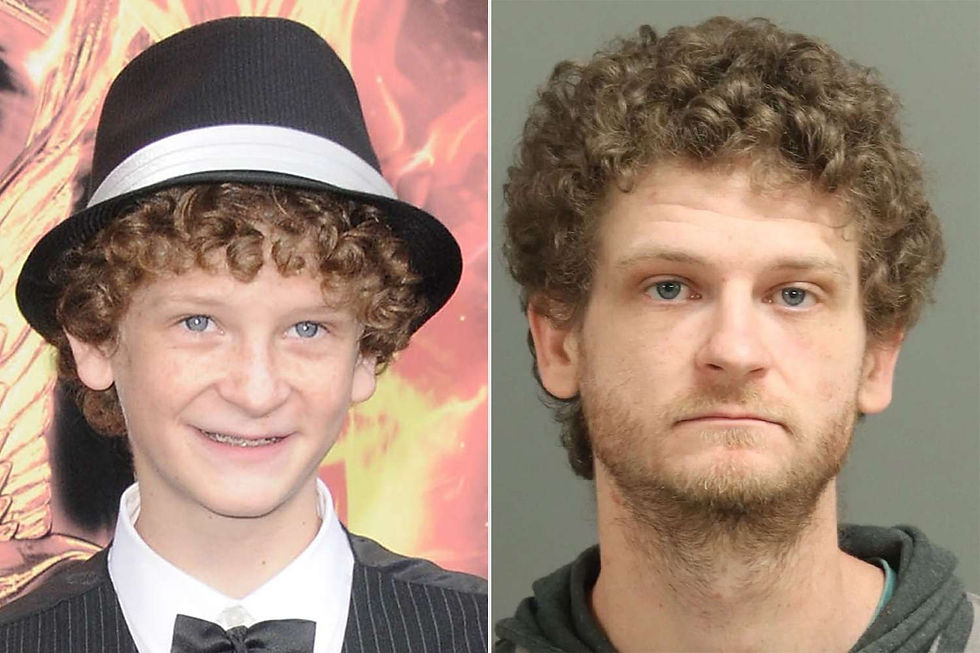
In the unpredictable arc of public life, where early promise can quickly give way to uncertainty, the story of Ethan Jamieson has taken a sharp and troubling turn. Once a young face in one of the most successful film franchises of the 2010s, he now finds himself at the center of a legal case that has drawn attention not for his work on screen, but for allegations that carry significant weight and consequence.
Jamieson, now 27, was arrested in April 2026 in Raleigh, North Carolina, on three felony counts of assault with a deadly weapon with intent to kill. The charges stem from an incident that reportedly took place in late March, when police responded to reports of gunfire involving a moving vehicle. What began as a routine emergency call quickly escalated into a criminal investigation that would eventually lead authorities to identify Jamieson as the suspect.
According to police accounts, the alleged incident involved a single gunshot fired toward a vehicle carrying three occupants. The victims, identified only by initials in legal documents, reported that the shot came from an individual riding an electric bicycle. Investigators later concluded that Jamieson was responsible for discharging the weapon, leading to his arrest weeks after the event.
The weapon in question has been described as a 9mm semi automatic handgun, and the charges reflect both the use of that weapon and the alleged intent behind the act. While no fatalities were reported, the seriousness of the charges underscores the potential danger of the situation, particularly given that the vehicle was occupied at the time.
Following his arrest, Jamieson was taken into custody and held without bail, a decision that highlights the severity of the allegations and the concerns raised by authorities. His next court appearance has been scheduled, where the legal process will begin to examine the details of the case and determine the path forward.
What makes this development particularly striking is the contrast between Jamieson’s early career and his current reality. He first entered the public eye as a child actor, with appearances in television shows such as One Tree Hill and later in the 2012 film The Hunger Games, where he portrayed a District 4 tribute. Though his role in the film was relatively small, the project itself became a global phenomenon, connecting him to a cast that included some of Hollywood’s most recognizable names.
His acting career, however, was brief. After a handful of roles, including a 2013 appearance on Justified, Jamieson stepped away from the industry. In earlier interviews, he had expressed a desire to live a more normal life, suggesting that the pressures of fame were not something he wished to pursue long term.
That decision now adds a layer of complexity to the present situation. The narrative is no longer about a rising actor navigating early success, but about someone whose path diverged significantly from that trajectory.
This is not the first time Jamieson has encountered legal trouble. Records indicate that he was previously arrested in March 2025 on a charge of resisting a public officer, an incident that resulted in a brief jail sentence. The proximity of that case to the current charges creates a pattern that authorities are likely to examine closely as proceedings continue.
Public reaction to the arrest has been shaped by that contrast between past and present. For many, Jamieson is still associated with a film that defined a generation, a cultural touchstone that continues to resonate years after its release. That association now exists alongside allegations that paint a very different picture, one defined by violence rather than performance.
There is also a broader conversation emerging around cases like this, particularly when they involve individuals who experienced early exposure to fame. The transition from childhood visibility to adult life can be unpredictable, shaped by factors that are often invisible to the public. While such context does not explain or excuse alleged actions, it adds depth to how these stories are understood.
At the same time, it is important to recognize the legal distinction between allegation and outcome. The charges against Jamieson are serious, but they remain accusations that must be tested through the judicial process. Evidence, testimony, and due process will ultimately determine responsibility and consequence, shaping how the case is resolved.
For now, the story remains in motion. It is defined by unanswered questions, ongoing investigation, and a legal process that has only just begun. What is clear, however, is that the trajectory of Jamieson’s life has shifted dramatically, moving from the world of film sets and early recognition to courtrooms and criminal charges.
In the end, the situation stands as a reminder of how quickly narratives can change. The image of a young actor in a globally celebrated film now sits alongside a far more serious and uncertain reality, one that will continue to unfold in the months ahead.


Comments