How James Gunn Made Superman’s Post‑Credits Moments Matter Less Than You Think
- Jul 12, 2025
- 3 min read
12 July 2025
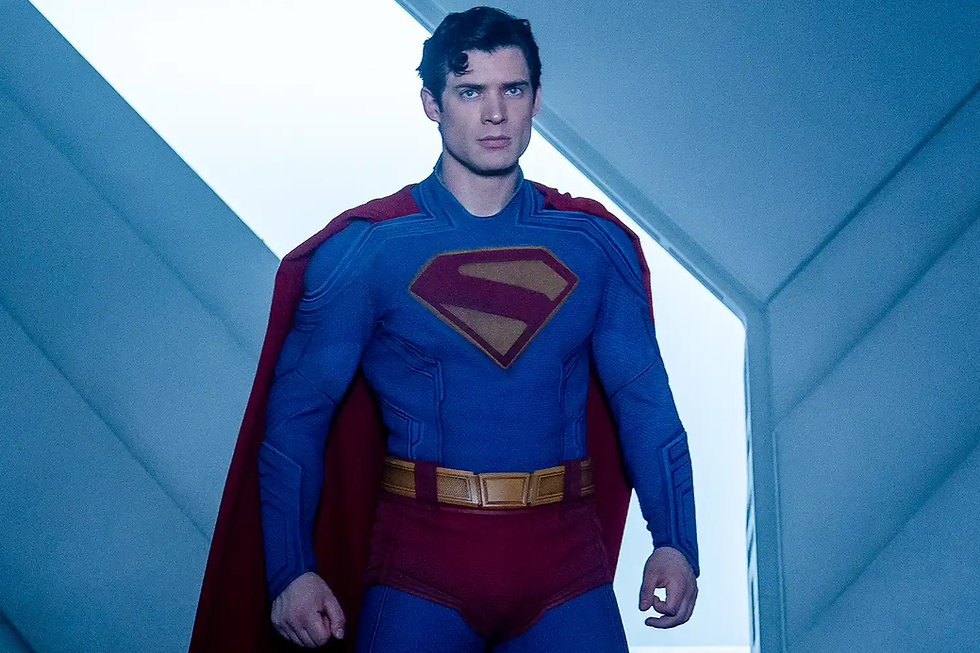
When James Gunn took on the daunting task of rebooting a legend, he had a clear mission beyond delivering spectacle: he wanted to respect the audience and the storytelling. That philosophy is nowhere more evident than in the two post‑credits scenes in his new Superman film, scenes that defy modern franchise conventions by offering delight without obligation.
The mid‑credits sequence is brief. We see Superman, played by David Corenswet, floating alone on the moon, tenderly cradling his super‑dog, Krypto. This poetic tableau pays homage to Grant Morrison’s All‑Star Superman comics, reflecting a moment of quiet introspection and genuine affection. It’s the image Gunn used early to market the film, a visual devotion that represents Superman’s emotional depth more than any cliff-hanger ever could.
Then comes the end‑credits moment: a tongue‑in‑cheek interaction between Superman and Mister Terrific (Edi Gathegi) as they inspect the rebuilt Metropolis. In the chaos caused by Lex Luthor’s last‑ditch bid to fracture the city splitting it in two with a dimensional rift—whole blocks were patched together hastily and imperfectly. Superman points out a misaligned wall, prompting Terrific’s visible annoyance. The exchange ends with a bemused Superman, a playful nod to the crew’s effort in reconstructing their set, and a humble reminder that even a god among men can appreciate the work of others.
The decision to include these scenes without teasing future DCU projects is deliberate. Gunn has spoken openly about his lessons from his Marvel tenure, admissions of regret over promotional stingers that set up future films yet weakened their own story arcs. He’s pointed specifically to Thor’s cameo in Guardians of the Galaxy Vol. 2 and the introduction of Adam Warlock; both were meant to energise fans but became narrative burdens “square pegs in round holes” when moving forward. With Superman, Gunn wanted to avoid repeating the mistake.
Still, these are not empty gestures. Gunn likens the moon‑and‑dog scene to the unexpected “punch‑to‑the‑face” reveal of Howard the Duck in Guardians of the Galaxy, irreverent, joyous, and wholly entertaining on its own terms. He conceives post‑credits moments as caps, they should reward viewers who stay rather than serve as seeds for pending projects.
Make no mistake: this new Superman does plant seeds for the evolving DC Universe. Milly Alcock’s brief Supergirl cameo signals the looming August 2026 standalone film, while cameos from characters like Peacemaker, Hawkgirl, Guy Gardner, and hints of a budding Justice League show DC Studios is quietly building a foundation. But Gunn stresses that any future stinger must feel organic, not shoehorned for franchise convenience.
This approach has garnered reactions from across the board. Some critics applaud the defiance of franchise fatigue, noting that audiences are growing weary of post‑credits teased universes. Others interpret the padded, poetic nature of Superman’s scenes as borderline self‑referential satire, especially given Gunn’s history, effectively poking fun at the “Marvel formula.” To those expecting sweeping revelations, the restraint might feel underwhelming. To many, though, it’s a breath of fresh cinematic air.
Within the film’s context, both scenes feel perfectly aligned with its tone. The moon scene underscores Superman’s humanity, his moments of solitude, his bond with Krypto while the Terrific bit grounds the story in real‑world grit and humor. They don’t promise the Justice League, but they do remind the audience that this world is lived in, everyday, one wall at a time.
Gunn continues to champion this ethos: don’t string audiences along with empty promises, don’t sacrifice structural coherence in service of marketing hype. Instead, honor the moment, the characters, and the crew. In one interview, he shared how he purposely shot the Terrific cameo while directing Peacemaker, weaving it into production with ease and sincerity. He also admitted that while setting up future projects isn’t off the table for DCU, he won’t force it until the next chapter truly calls for it.
This mindset marks a turning point in franchise filmmaking. It respects the audience’s attention more than the marketing machine choosing to surprise rather than tease, to reward rather than manipulate. By stepping back from conventional stingers, Gunn is redefining what a cinematic postlude should be: something that enhances and enriches this moment, not merely a tease of the next.
Ultimately, these scenes speak less to what’s coming than to what’s already been delivered: a film that’s earnest, ambitious, and grounded even as it reaches for the stars. They reward loyalty not with a promise, but with a wink and a nod. And in an age of franchise fatigue, that small humility might be the truest superpower of all.


Comments