Dave Mason Dies at 79 Leaving Behind a Defining Legacy in Rock Music
- Apr 22
- 4 min read
22 April 2026
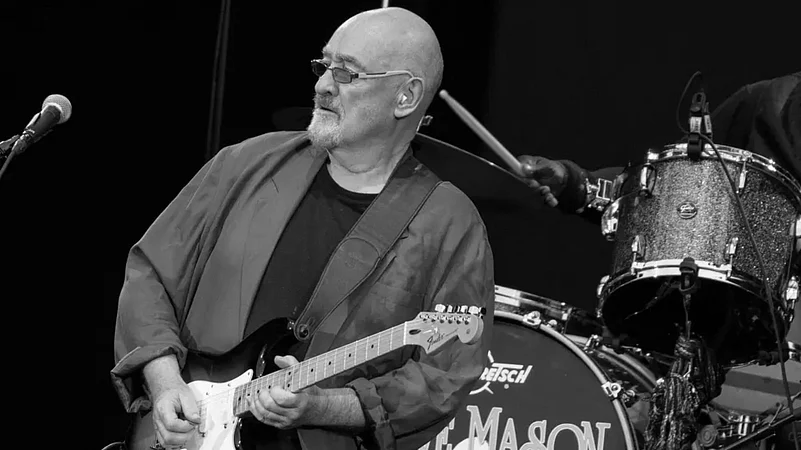
In the ever evolving story of rock music, there are artists who define moments, and then there are those who quietly shape the sound itself. Dave Mason belonged to the latter. His name may not always have commanded the loudest spotlight, but his influence echoed through decades of music, carried in guitar lines, lyrics, and collaborations that helped define an era. Now, with his passing at the age of 79, that influence feels more visible than ever.
Dave Mason died on April 19, 2026, at his home in Gardnerville, Nevada. His family confirmed that he passed away peacefully, closing a life that had been deeply intertwined with music for more than six decades. The cause of death has not been publicly disclosed, though he had been dealing with ongoing health challenges in recent years that had already forced him to step back from touring.
For many, Mason will always be remembered as a founding member of the band Traffic, a group that helped shape the sound of late 1960s rock. Formed in 1967 alongside Steve Winwood, Jim Capaldi, and Chris Wood, the band blended elements of rock, jazz, and psychedelia in a way that felt both experimental and accessible. Mason’s role in that formation was not just foundational but creative. He wrote and performed some of the band’s most enduring songs, including “Feelin’ Alright?” and “Hole in My Shoe,” tracks that would go on to become classics.
Yet his relationship with Traffic was never entirely straightforward. Mason moved in and out of the band over the years, his time marked by creative differences and a desire to explore beyond the group’s evolving identity. This pattern, while sometimes seen as instability, also reflected something essential about his character. He was not an artist interested in staying still. Movement, both musical and personal, defined him.
That movement carried into his solo career, which became another significant chapter in his life. Albums like Alone Together and Let It Flow established him as more than just a band member, revealing a musician capable of crafting his own distinct voice. His 1977 hit “We Just Disagree” became one of his most recognizable songs, a track that resonated across generations and secured his place on radio playlists for decades.
What set Mason apart, however, was not just his solo success but his ability to exist within multiple musical worlds. Over the years, he collaborated with some of the most influential artists in rock history, including Jimi Hendrix, Eric Clapton, George Harrison, and members of The Rolling Stones. These collaborations were not fleeting moments of association but meaningful contributions that placed him within the fabric of some of the era’s most important recordings.
One of the most notable examples of this was his involvement in Hendrix’s work, where his guitar playing became part of a sound that would define a generation. He also contributed to George Harrison’s All Things Must Pass, further cementing his presence in projects that extended far beyond his own catalog.
Despite these achievements, Mason’s relationship with fame remained complicated. In interviews, he often expressed discomfort with the idea of being seen as a traditional rock star, emphasizing instead his love for music itself. This perspective shaped not only his career choices but also the way he was perceived. He was never defined by spectacle, but by substance.
In 2004, Mason’s contributions were formally recognized when he was inducted into the Rock and Roll Hall of Fame as a member of Traffic. The honor reflected not just his work with the band but his broader impact on the genre, an acknowledgment that his influence extended far beyond any single project.
In later years, his life shifted toward a quieter rhythm. Health issues began to take a more prominent role, leading to the cancellation of tours and eventually his retirement from performing in 2025. Even then, his connection to music did not fade. He continued to write, reflect, and remain engaged with the art form that had defined his life.
Those who knew him and those who followed his work have described him as both grounded and deeply passionate. He was someone who valued the process of creation more than the recognition that came with it, a trait that allowed him to move through different phases of his career without being confined by expectations.
His passing has prompted a wave of reflection from fans and fellow musicians alike. For many, it is not just the loss of an artist but the closing of a chapter in rock history. His music, however, remains, continuing to be discovered, revisited, and appreciated in ways that transcend time.
There is something enduring about that kind of legacy. It is not tied to a single moment or a single achievement, but to a body of work that continues to resonate long after its creator is gone. For Mason, that body of work spans decades, genres, and collaborations, each one adding to a narrative that feels both expansive and deeply personal.
In the end, Dave Mason’s story is not defined by a single role, whether as a founding member of Traffic or as a solo artist. It is defined by movement, by a willingness to evolve, and by a commitment to music that remained constant through every phase of his life.
And as his voice and guitar continue to echo through the songs he left behind, it becomes clear that his influence is not something that ends. It simply continues, carried forward by the music that still feels as alive as the moment it was created.


Comments