A Painting Reappears, and with It History’s Echoes
- Sep 6, 2025
- 2 min read
6 September 2025
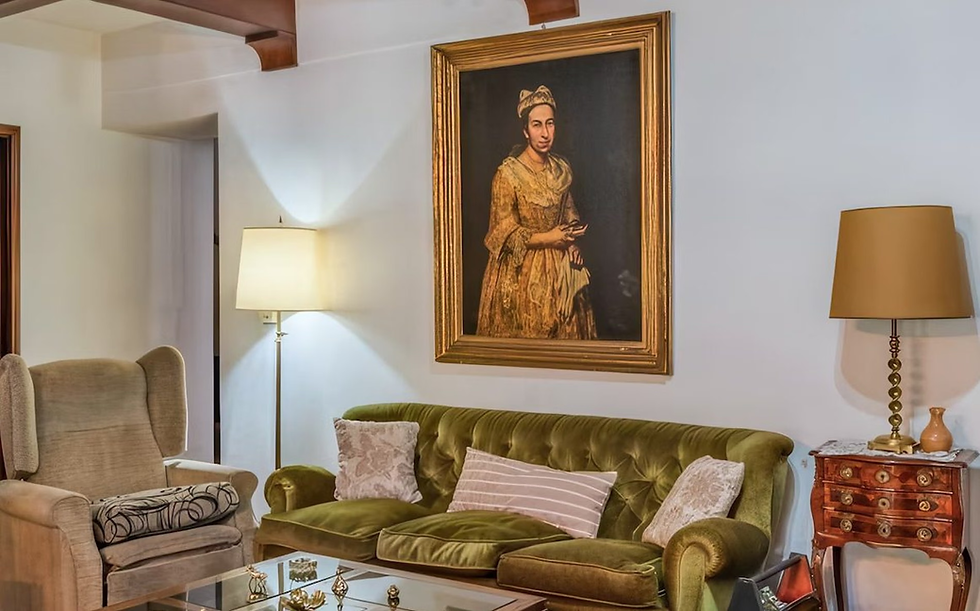
An elegant early 18th-century portrait titled Portrait of a Lady by the Italian master Giuseppe Vittore Fra Galgario lost for nearly eight decades has resurfaced in a modest villa in Mar del Plata, Argentina. Its reappearance followed a chain of happenstance and determination when Dutch journalists, pursuing leads on Nazi-looted art, chanced upon it in an online real estate listing.
That villa belonged to Patricia Kadgien, daughter of Friedrich Kadgien, a high-ranking Nazi official and financial advisor to Hermann Göring who fled Europe after World War II and settled in South America. Kadgien’s long-missing painting initially appeared to authorities when published photos of the home’s interior displayed the work prominently over a plush green velvet sofa.
Investigators moved swiftly. Federal prosecutors in Argentina launched a raid, only to discover that the painting had vanished, replaced by a tapestry. This led to the arrest and house arrest of Patricia Kadgien and her husband, Juan Carlos Cortegoso, on charges including concealment of stolen art and obstruction of justice.
The couple subsequently surrendered the painting through legal counsel. Experts determined its authenticity and placed it in secure custody. The painting, dating to around 1710 and valued at approximately USD 50,000, is now being preserved while the case unfolds.
This discovery holds deep significance, not only for its artistic value but also for what it represents in the broader narrative of art restitution and the legacy of Nazi looting. The painting was originally seized from Jewish-Dutch art dealer Jacques Goudstikker in Amsterdam in 1940 under coercive circumstances and was one among more than a thousand works lost during the Nazi expropriations of cultural heritage. Goudstikker died while fleeing the Nazi advance, and many of his collection’s works remain missing.
Goudstikker’s heirs, led by Marei von Saher, have long pursued restitution. The return of this portrait finally echoes a small measure of justice, a long-delayed reclaiming of cultural memory. The legal path to final resolution is still unfolding as Argentinian authorities continue to vet additional artworks found during the investigation. Over 25 other paintings and drawings are now under scrutiny to determine if they too were acquired illicitly.
Beyond the courtroom drama, the story highlights the power of modern technology and collaborative journalism. A simple real estate listing served as the unlikely beacon that guided authorities back to a fragment of stolen history. The painting’s anonymity for decades, passed quietly through a family’s possession in a distant land, is now disrupted by public attention and scholarly vigilance.
At the threshold of memory, that portrait stands not just as a work of art, but as a testament to resilience of families, of historical truths reclaimed, and of the persistent effort to heal wounds inflicted by cultural vandalism. As the legal process plays out, this tiny painting, quietly rediscovered on a villa wall, joins a long lineage of stories that affirm how unrelenting some truths can be when finally brought into the light.


Comments